

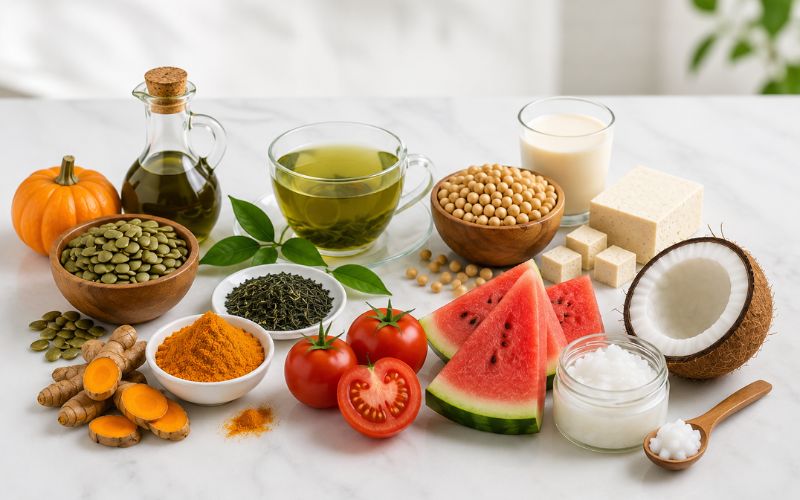
DHT (dihydrotestosterone) is one of the leading causes of hair thinning in both men and women. When DHT levels rise, hair follicles shrink and over time they stop producing hair altogether. While no food alone can reverse hair loss, certain DHT blocker foods may help slow DHT production and support a healthier scalp environment. Here is what the evidence currently says about the best options to include in your diet.
What Is DHT and How Does It Cause Hair Loss?
DHT is an androgen hormone produced when an enzyme called 5-alpha reductase converts testosterone into DHT. When DHT binds to hair follicles, it triggers a process called miniaturisation. Follicles progressively shrink, produce thinner strands, and eventually stop growing hair entirely. This is the mechanism behind androgenetic alopecia, commonly known as male pattern baldness or female pattern hair loss.
If you want a deeper understanding of how this process works, our guide on DHT and hair loss covers it in full. Reducing DHT levels naturally, or slowing its production, may help protect hair follicles and slow further hair loss.
DHT Blocker Foods Backed by Research
1. Pumpkin Seed Oil: The Strongest Food-Based Evidence
Pumpkin seed oil is the most robustly studied food-based DHT blocker. A 2014 randomised controlled trial published in Evidence-Based Complementary and Alternative Medicine found that men who took pumpkin seed oil for 24 weeks saw a 40% increase in hair count compared to a placebo group. The mechanism is thought to involve inhibition of the 5-alpha reductase enzyme.
How to use it: One to two tablespoons of pumpkin seed oil daily, used in salad dressings or taken as a supplement, is the dose used in most research. Whole pumpkin seeds are a good dietary source, though the oil form appears to deliver more concentrated benefit.
2. Green Tea: A Natural 5-Alpha Reductase Inhibitor
Green tea contains epigallocatechin gallate (EGCG), a well-studied antioxidant shown in laboratory research to inhibit 5-alpha reductase activity and reduce DHT production. EGCG also supports healthy blood circulation, which is important for nutrient delivery to hair follicles.
How to use it: Two to three cups of green tea per day is a reasonable dietary target. Matcha provides a more concentrated EGCG dose if you prefer a single daily drink.
3. Soy-Based Foods: Isoflavones and DHT Inhibition
Soy protein contains isoflavones, which are plant compounds that may reduce DHT levels by inhibiting 5-alpha reductase. Some studies have found associations between soy isoflavone intake and reduced androgen activity. This makes soy-based foods particularly relevant for those managing female pattern hair loss, where androgen sensitivity plays a significant role.
How to use it: Tofu, edamame, tempeh, and unsweetened soy milk are all practical sources. It is worth noting that current evidence is largely based on cell and animal studies; large-scale human trials are still limited.
4. Turmeric: Targeting the Androgen Hormone Pathway
Curcumin, the active compound in turmeric, has demonstrated the ability to decrease testosterone production and reduce the conversion of testosterone into DHT in research settings. It also has well-documented anti-inflammatory properties, which may benefit scalp health by reducing the low-grade inflammation often associated with hair follicle miniaturisation.
How to use it: Curcumin is poorly absorbed on its own. Consuming turmeric with black pepper, which contains piperine, significantly improves bioavailability. One teaspoon of turmeric in food daily, or a curcumin supplement standardised to 95% curcuminoids, are common approaches.
5. Lycopene-Rich Foods: Tomatoes, Watermelon, and Guava
Lycopene is a carotenoid antioxidant found in tomatoes, watermelon, pink grapefruit, and guava. Research, primarily in the context of prostate health, has linked lycopene intake to reduced 5-alpha reductase activity. Since the same enzyme drives DHT-related hair loss, these findings are potentially relevant for the scalp too, though direct hair loss trials are lacking.
How to use it: Cooked tomatoes, such as in passata or roasted tomatoes, provide more bioavailable lycopene than raw. Aim to include lycopene-rich foods several times per week as part of a varied diet.
6. Coconut Oil: Topical and Dietary Support
Coconut oil is rich in medium-chain triglycerides (MCTs), which some research suggests may interfere with the conversion of testosterone into DHT. Its benefit for hair health is arguably stronger as a topical treatment. Coconut oil penetrates the hair shaft more effectively than most other oils, reducing protein loss and protecting follicles from damage.
How to use it: Use in cooking as a substitute for other oils, or apply a small amount directly to the scalp as a weekly treatment. As a dietary DHT blocker, the evidence is less robust than pumpkin seed oil or green tea.
Diet Is Just One Piece of the Puzzle
Incorporating DHT blocker foods into your daily routine is a smart and natural step toward managing hair loss, but diet works best as part of a broader approach. For more on building a hair-friendly diet, take a look at our guide to healthy foods for stronger hair. Alongside a balanced diet, the right topical products can make a real difference to scalp health and hair vitality.
At REGROW UK, our hair care range is formulated with proven, purposeful ingredients that complement a hair-friendly lifestyle. Our sulfate-free, paraben-free, silicone-free shampoos and men's and women's Hair Tonics are powered by saw palmetto, a scientifically recognised DHT inhibitor, alongside caffeine extract, which has been shown to stimulate hair follicles and support healthy hair growth. We also include Australian rosemary and nettle extract to improve scalp circulation, niacinamide to support follicle health, and biotin to encourage stronger, healthier hair. Every ingredient is chosen with purpose, and nothing harmful makes the cut.
REGROW UK is one of the best natural hair care systems available, and the formulas back that up. Whether you are in the early stages of hair thinning or looking to take a more proactive approach, pairing a DHT-conscious diet with REGROW UK's natural topical solutions gives your hair the strongest possible support from both inside and out. Explore the full REGROW UK collection and take the next step toward a healthier scalp.
Frequently Asked Questions
Can food alone stop or reverse hair loss caused by DHT?
No single food or diet change can stop DHT-related hair loss on its own. The foods discussed here may help support a healthier scalp environment and, in some cases, slightly reduce DHT production, but they work as a complement to a wider routine rather than a standalone fix.
How long does it take to see results from dietary changes?
Hair growth happens in cycles that span months, so dietary changes need consistency over a similar timeframe before any difference becomes visible. Most of the research behind foods like pumpkin seed oil measured results over several months of continuous use, not weeks.
Is DHT-related hair loss the same for men and women?
The underlying mechanism, DHT binding to hair follicles and causing them to shrink, is shared, but the pattern often differs. Men more commonly see a receding hairline or thinning crown, while women more often experience diffuse thinning across the scalp. Anyone noticing unusual shedding or thinning is best speaking with a GP or pharmacist to understand what's behind it.
Are DHT blocker foods safe to combine with hair loss medication or supplements?
Most of the foods mentioned are simply nutrient-dense whole foods and safe as part of a normal diet. That said, anyone taking medication or supplements for hair loss should check with a doctor or pharmacist before making significant dietary changes, particularly with concentrated supplement forms rather than whole foods.
Do topical products work faster than dietary changes?
Topical treatments applied directly to the scalp can begin interacting with the follicle environment more immediately, but visible results still take time regardless of the approach, since hair growth itself is a slow, cyclical process. Combining both is generally considered more effective than relying on either alone.
Is thinning hair always caused by DHT?
Not always. Hair thinning can also stem from stress, nutrient deficiencies, hormonal changes unrelated to DHT, certain medications, or underlying health conditions. If thinning is sudden, patchy, or accompanied by other symptoms, it's worth getting it checked rather than assuming it's androgenetic.